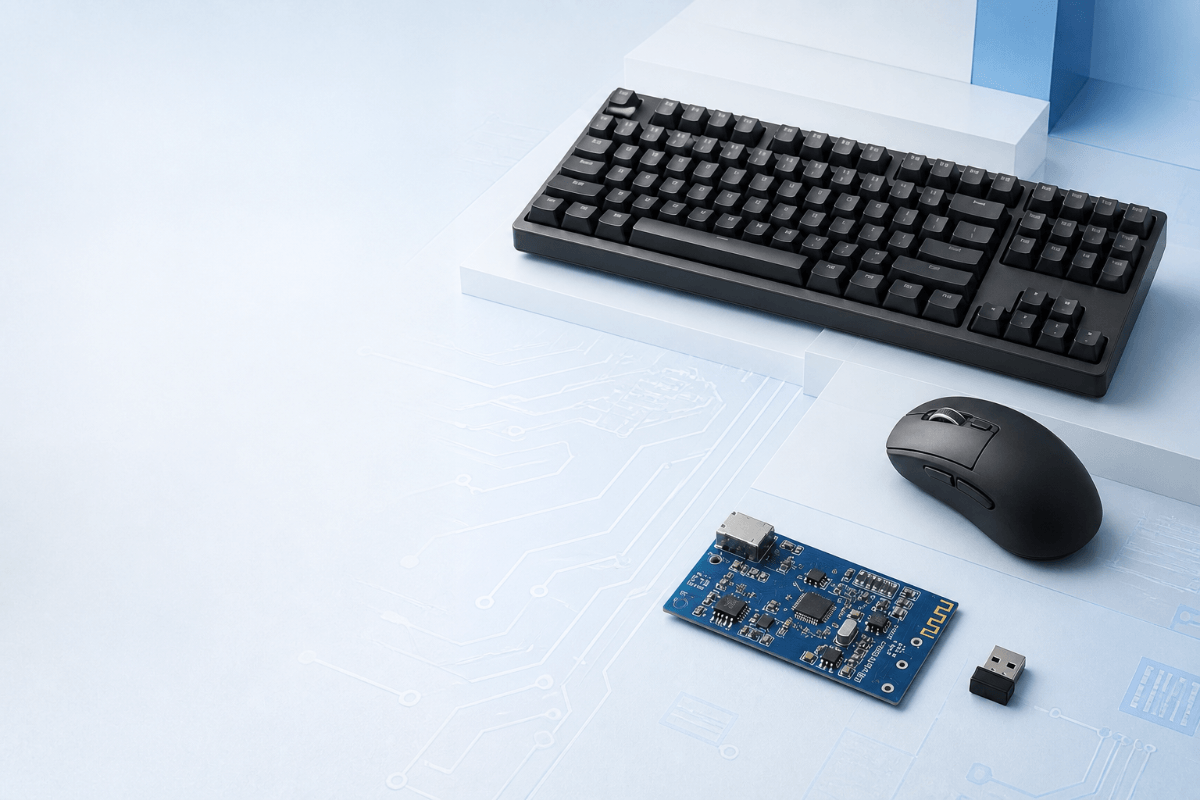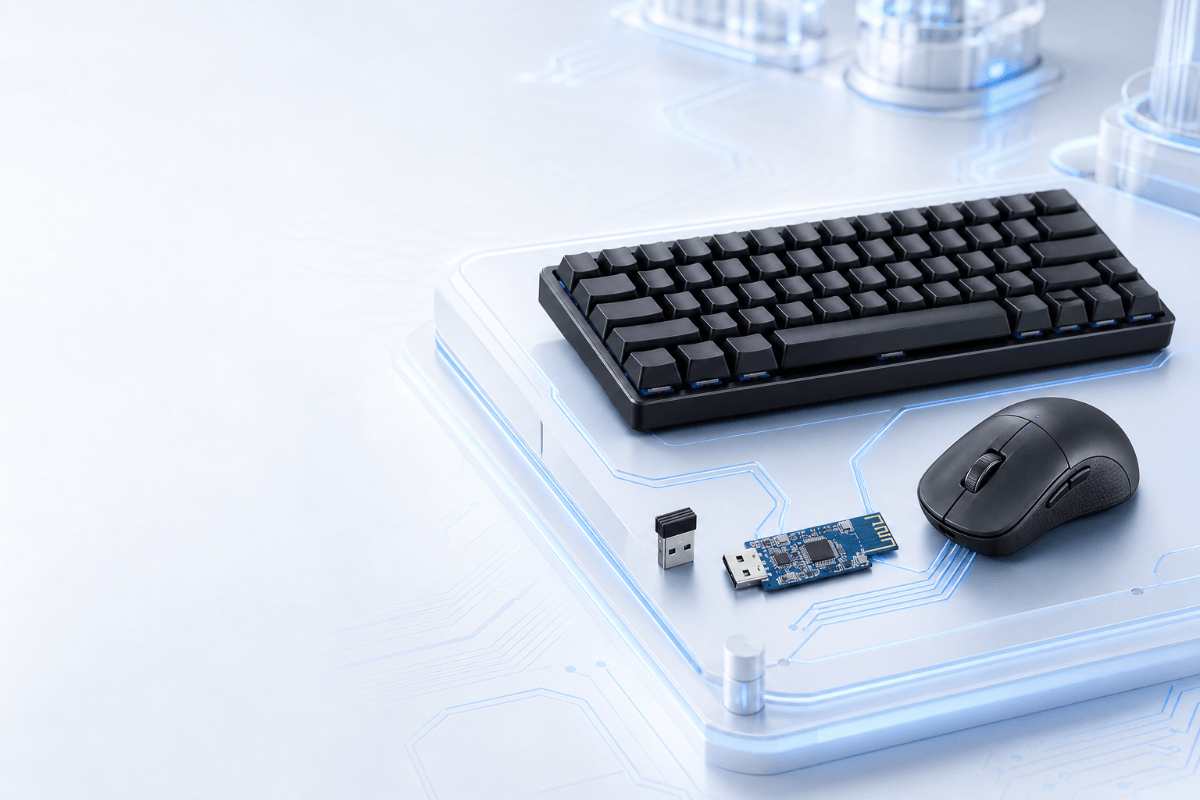


Keyboard Solution Capabilities
- 61 / 87 / 104-key mechanical keyboard layout integration
- Three Bluetooth hosts plus 2.4G and wired switching
- N-key rollover, RGB lighting, and Win / Mac modes
- Battery indication, sleep/wake, and driver configuration
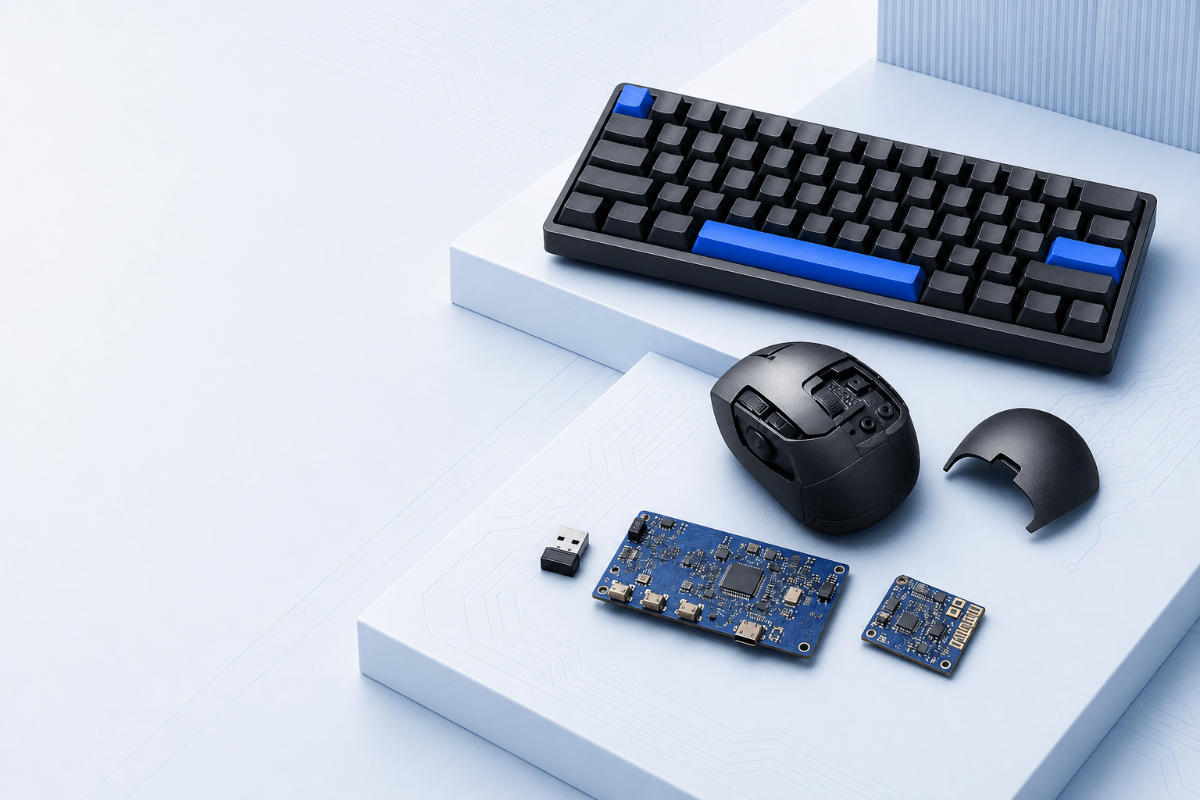
Broader hardware and software customization for differentiated, multi-product programs
For tri-mode programs that need independent BOM, enclosure, sensor or keyboard matrix, RGB, battery, receiver, and driver planning, with an emphasis on differentiation and reuse across layouts.
Applications
Plan hardware, firmware, receiver, and driver around product differentiation while reusing platform capabilities across product categories.
Keyboard Solution Capabilities
Mouse Solution Capabilities
Confirm together during project definition
Target BOM and enclosureSensor or matrixComponents and interfacesLighting and batteryDriver and production toolsEngineering Capabilities
Independent platform planning, tri-mode connectivity, hardware, firmware, branded software, and production delivery combine around project boundaries.
An independent controller and firmware stack planned around mouse or keyboard BOM and delivery boundaries.
Wired, 2.4G, and multi-device Bluetooth switching, pairing, reconnection, and status indication.
Sensor or keyboard matrix, PCB, antenna, power, charging, and PCBA design support.
DPI or key functions, polling, RGB, battery, sleep, and updates built to the device definition.
Controls, DPI, macros, lighting, profiles, receiver tools, and firmware updates.
Prototype, validation, pilot run, production testing, and issue resolution.
Customization Scope
Four stages align hardware, component, function, and manufacturing boundaries from the start of the program.
Hardware design based on enclosure, ports, battery, antenna, and target BOM.
Selected mouse sensors and controls plus keyboard matrix, switch, and layout integration.
Custom connectivity, DPI or keys, lighting, polling, battery, sleep, and update strategy.
Driver, receiver-tool, test-fixture, and production-flow integration.
Selection Guidance
Choose YJX-2012C for dual-1K tri-mode programs that need independent BOM, enclosure, component, and software planning. Use FR2012A when scope is clear and schedule or cost matters more; evaluate nRF54L15 for dual-8K flagship programs.
Prepare the product-line plan, target BOM, enclosure space, components, lighting, software features, and delivery schedule.
Parameter Notes
Up to 1K wired and 2.4G polling and below 15mA mouse operating current depend on the complete-device configuration and test conditions. Keyboard power also varies with layout, matrix scanning, RGB lighting, and battery design; final values require prototype testing.