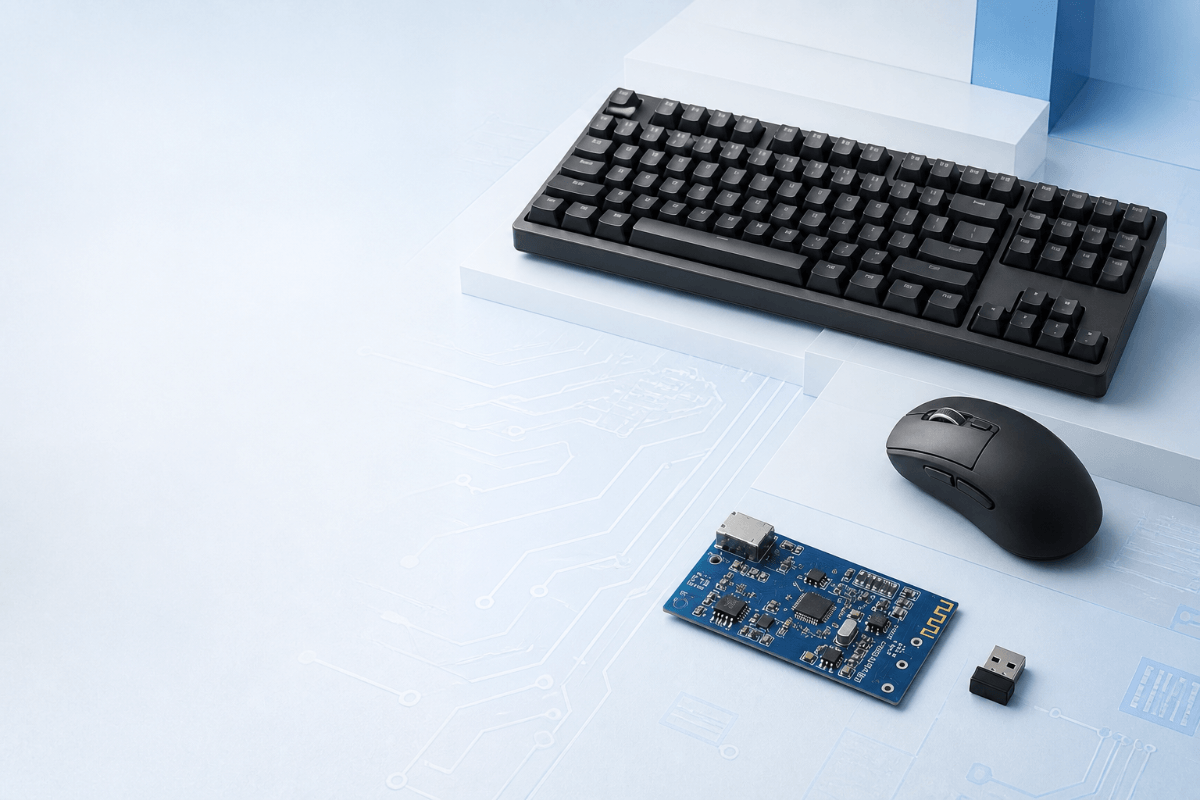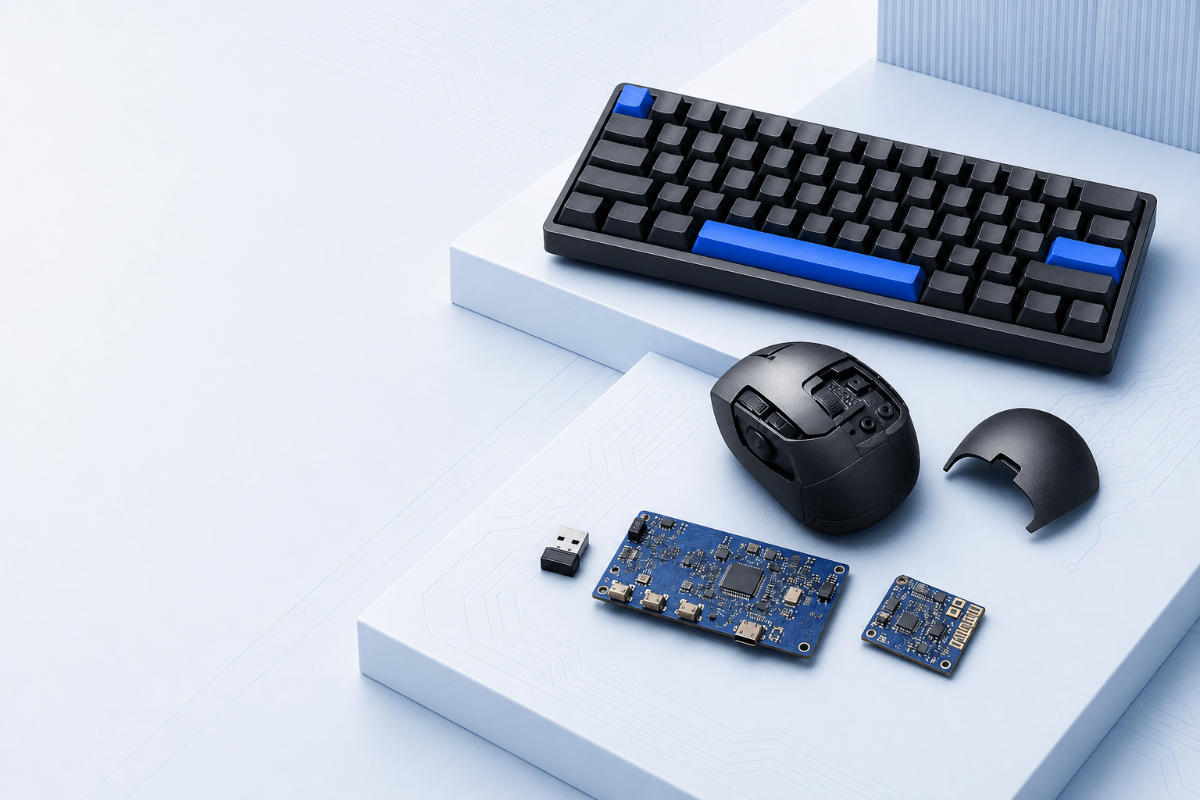


Keyboard Solution Capabilities
- High-frequency matrix scanning and anti-ghosting
- Up to 8K wired and 2.4G polling configuration
- Keys, macros, lighting, and multi-device functions
- Joint receiver, driver, and complete-device performance validation
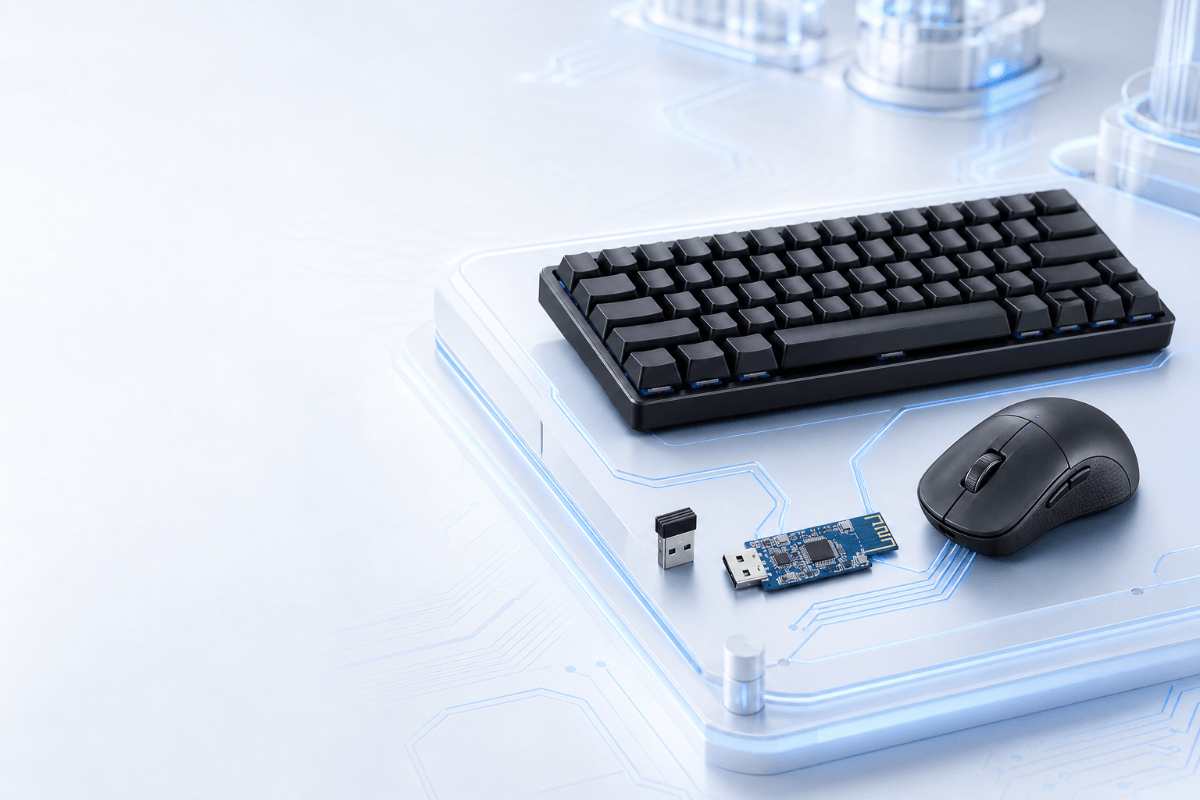
A complete high-polling performance path from input sampling to receiver and device validation
For esports peripherals built around high polling, wireless performance, and a flagship experience, with coordinated sensor or matrix, RF, USB, firmware, receiver, and complete-device tuning.
Applications
Input sampling, wireless links, receiver, and driver are tuned around complete-device goals instead of a single isolated metric.
Keyboard Solution Capabilities
Mouse Solution Capabilities
Confirm during project definition
Sensor and matrix scanningUSB interface and mainboard2.4G receiverBattery and RGB loadComplete-device test baselineEngineering Capabilities
High polling, tri-mode connectivity, power, drivers, and production testing move through one engineering workflow to reduce late integration risk.
Up to 8K polling configuration in both wired and 2.4G modes.
Unified wired, 2.4G, and Bluetooth connection, switching, and pairing.
Joint scan, sensor, RF, USB, and firmware-task optimization.
Active, idle, sleep, and wake strategies planned for the usage scenario.
Configuration, firmware updates, receiver tools, and branded software.
RF, performance, power, reliability, and production-test validation.
Customization Scope
Four connected stages keep hardware selection, firmware experience, and validation criteria aligned from project definition.
PCBA planned around enclosure, antenna, power, USB, sensor, and target BOM.
Customer-selected sensor integration with mouse sampling or keyboard matrix tuning.
Project-specific polling, connectivity, controls, lighting, power, and updates.
Complete-device performance validation, test tools, pilot run, and production support.
Selection Guidance
Choose nRF54L15 when up to 8K wired and 2.4G polling is central and the program can support joint sensor or matrix, USB, RF, battery, and device validation. For mainstream dual-1K programs, choose FR2012A for speed or YJX-2012C for customization depth.
Prepare the product form, target polling rate, sensor or keyboard layout, battery, and lighting requirements.
Parameter Notes
Dual 8K and below 15mA are platform capabilities. Actual results depend on the sensor, board, battery, firmware configuration, and test conditions. Latency is confirmed through complete-device testing after requirements are defined.